

My Take On: Interior Design Rules
Guiding principles for a home that evolves with you.
Interior design can feel overwhelming, but over the years I’ve found myself returning to the same core principles again and again. These are the quiet anchors— practices that guide me no matter the project or the space. Rather than fixed rules, they focus on creating a home that feels intentional, lived-in, and deeply personal. Think of them as a shell for designing at a slower pace, trusting your instincts, and letting your home evolve with you.
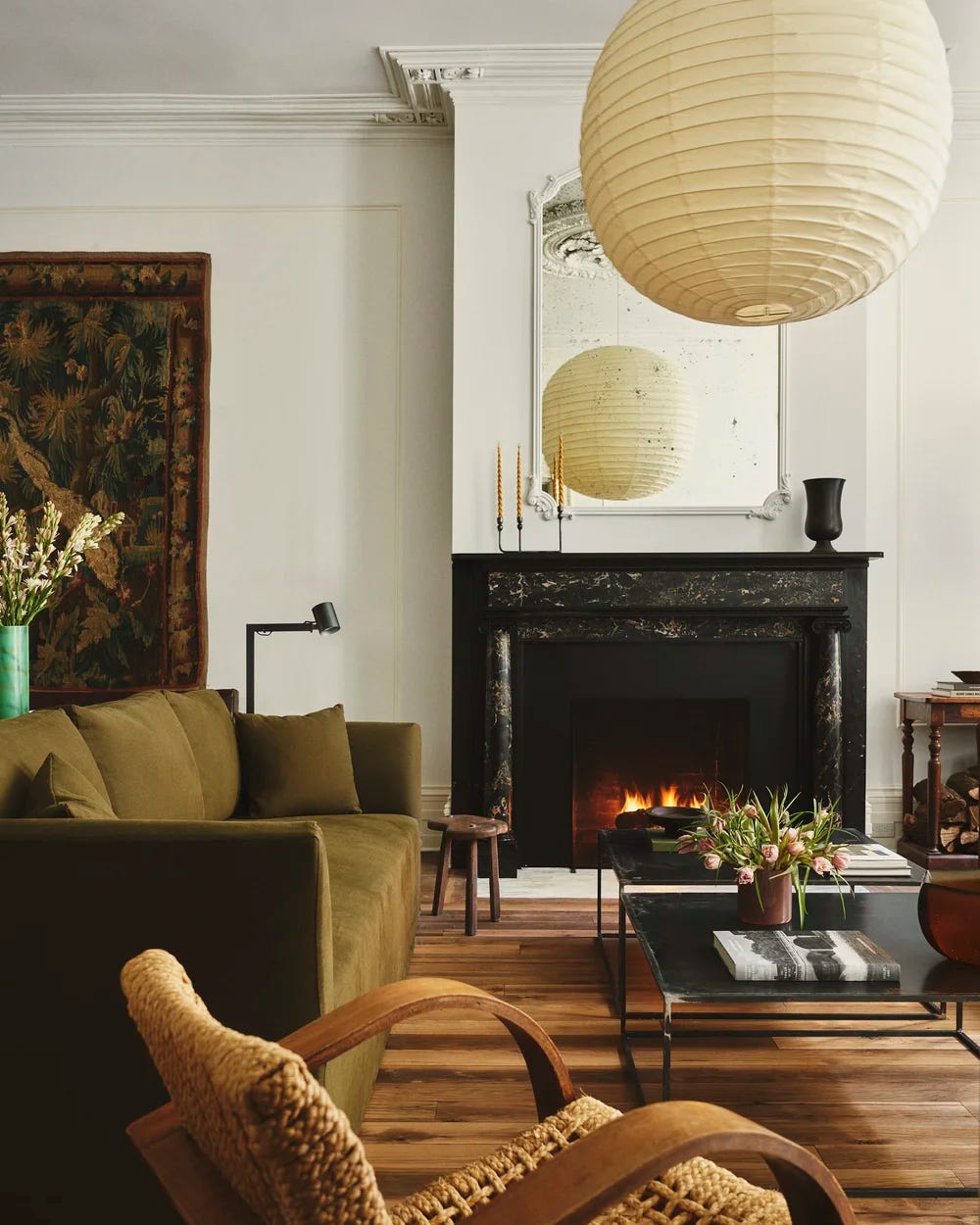
Slow Down and Take Your Time.
Allow the space to evolve. A truly great home is collected, not decorated. It takes months—sometimes years—to develop a layered, soulful feel. Live in the space first. Wait three months before buying major furniture. Notice how the light moves, where you naturally sit, and what storage you actually need. If you’re feeling overwhelmed, focus on a single room— or even a single detail of that room: the sofa, the chair, the bed, the table. The rest can wait.
Look to Your Closet for Your Perfect Color Palette.
If you love wearing a color, you will love living with it. Your wardrobe is your most authentic mood board. Pull out your ten favorite pieces— sweaters, jackets, scarves. The dominant colors and textures you find there are your natural palette. If you’re unsure, introduce color through easily swapped pieces first: pillows, throws, art.
Balancing Old and New Pieces
All new furniture feels like a showroom; all old furniture feels like a museum. The magic is in the mix. Invest in new pieces for comfort and longevity (a well made sofa, a supportive bed). Bring in vintage for character and story (an antique side table, a weathered chest). Patina is personality. A helpful guideline: 70/30— 70% new foundational pieces, 30% vintage or antique accents.
Design for the Life You Actually Live
Your home should work for you and the people who live there. A beautiful room that doesn’t support your daily rhythm is a missed opportunity. Don’t design a formal living room no one uses or buy a massive dining table if you eat every meal at the kitchen island. Ask yourself, What truly happens in this room? Let that answer guide every decision. Design for the life you have, not the life you think you should have.
Jute Rugs.
Think of the floor as the foundation, literally and figuratively. Jute is a quiet powerhouse— durable, affordable, and endlessly adaptable. It adds an organic layer and acts as a neutral canvas, grounding the room without competing for attention. Perfect for high traffic areas like dining rooms and mudrooms. Try the “rug sandwich” method: a large jute rug beneath a smaller, patterned or vintage rug for depth and warmth.
Tables, Lamps, Chairs.
When building a room, start with these three building blocks…
Tables: Every seat should have a reachable surface for a drink or book. Prioritize function over matching sets.
Lamps: Never rely on overhead lighting alone. Lamps create atmosphere and soft light is transformative. And yes, a lamp in the kitchen is always a good idea.
Chairs: Comfort first. Arrange seating to encourage conversation, not too far apart, not too rigid. If space is limited, an ottoman can stand in for a coffee table while offering extra seating.
Power of Proportion.
Scale and proportion are the invisible forces that make a room feel right. A rug that’s too small will shrink the room; furniture that’s too petite will make a large room feel empty. Use painter’s tape to map out dimensions before buying. And when hanging art, aim for eye level— the center should land at about 60 inches from the floor.
You can follow along on instagram here.
You can read more newsletters here.
You can inquire about interior design here.
If you enjoyed this newsletter, I’d love it if you took a moment to subscribe, tap the heart, leave a comment, share with a friend, or shop all the good things. Every click and comment means the world—thank you so much!